














































icon

Inside the Robotic Operating Room: How Surgery Is Performed Without Direct Touch

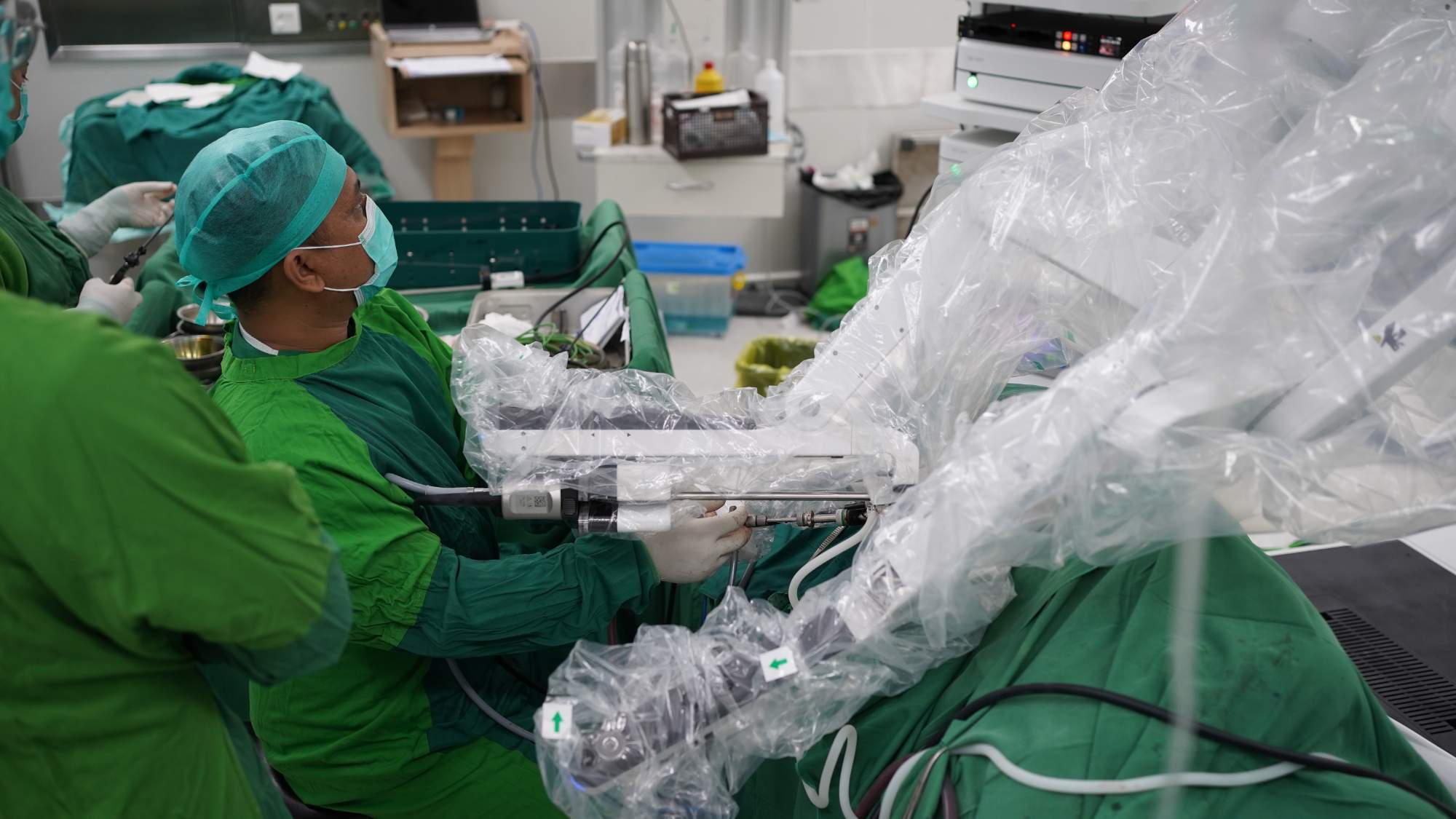
Robotic surgery is a coordinated, surgeon-led process where technology enhances precision, vision, and control. Through small incisions, 3D visualisation, and motion translation, surgeons perform highly accurate procedures without direct touch—resulting in less tissue disruption and faster recovery, while remaining fully in command at every step.
Articles
13 May 2026
Country(s)
iconiconiconiconiconiconicon
Robotic surgery often sounds futuristic—machines operating on their own while surgeons step back. It’s a carefully coordinated process where technology extends the surgeon’s hands, vision, and precision. Here’s a clear, step-by-step look inside the robotic operating room.
  1. Preparation: Setting the Stage
    Before surgery begins, the patient is positioned, and anaesthesia is administered, as in conventional procedures. The surgical team then sets up the robotic system—commonly platforms like the Edge Medical MP1000—ensuring all instruments and imaging systems are ready.
  2. Access: Small Incisions, Strategic Entry
    Instead of a large incision, the surgeon makes a few small openings. Through these, thin instruments and a high-definition 3D camera are inserted. These entry points are carefully planned to optimise access while minimising tissue disruption.
  3. The Console: Where the Surgeon Operates
    The surgeon sits at a nearby console, not across the room. Looking into a magnified 3D view, they control the robotic arms using hand and foot controls. Every movement is deliberate—the system does not act independently.
  4. Motion Translation: From Hands to Micro-Precision
    Here’s where the technology shines. The surgeon’s hand movements are translated into smaller, steadier actions by the robotic instruments. Natural tremors are filtered out, and movements can be scaled for enhanced precision—especially useful in delicate procedures.
  5. The Robotic Arms: Extending Human Capability
    The robotic arms hold specialised instruments that can rotate and bend far beyond the human wrist. This allows surgeons to operate in tight or complex areas with greater dexterity and control.
  6. Real-Time Visualisation: Seeing More, Doing Better
    The 3D camera provides a magnified, high-definition view of the surgical site. This enhanced visualisation helps the surgeon distinguish fine structures, improving accuracy and decision-making during the procedure.
  7. Completion: Precision Meets Recovery
    Once the procedure is complete, the instruments are removed, and the small incisions are closed. Because the approach is minimally invasive, patients often experience less pain, reduced scarring, and faster recovery times.
Human Skill, Enhanced by Technology
Despite the advanced equipment, the surgeon remains fully in control at every step. Robotic surgery doesn’t replace expertise—it amplifies it. By combining human judgment with technological precision, it represents a significant evolution in how surgery is performed.

Understanding what happens behind the scenes helps demystify the process—and highlights that even without direct touch, patient care remains deeply hands-on.
 
Save to bookmark
Share

What to read next


Migraines Are More Than a Headache
26 June 2026
Migraines Are More Than a Headache
Migraines are more than severe headaches — they are complex neurological events that heavily impac...
Telesurgery and the Future of Robotic-Assiste...
24 June 2026
Telesurgery and the Future of Robotic-Assisted Care
Robotic surgical technology may support future telesurgical and remote collaboration applications. W...
The Monsoon Mindset: How Weather Changes Quie...
22 June 2026
The Monsoon Mindset: How Weather Changes Quietly Affects Stress and Focus
Heavy rainy seasons and prolonged periods of reduced sunlight can quietly affect mood, focus, and wo...